Overview — MD/MS Program Structure & Training Philosophy
PCMS Bhopal structures each MD/MS program to combine rigorous academic coursework, supervised clinical rotations, hands-on procedural training, and a mentored research project. The postgraduate curriculum follows NMC guidelines while also emphasizing competence-based learning: clinical reasoning, procedural skill, bedside manner, evidence-based practice and scholarly activity.
MD/MS Courses & Detailed Descriptions
Below is an expanded description for every major MD/MS discipline offered at PCMS Bhopal. Each entry includes the training focus, core rotations, procedural skills learned, typical assessment structure and career prospects.
Clinical Specialties (Core)
MD — General Medicine
Training focus: Diagnosis and management of adult medical diseases, critical care, internal medicine subspecialties (cardiology, nephrology, endocrinology, neurology, gastroenterology).
Core rotations: Emergency medicine, ICU, cardiology, nephrology, neurology, infectious diseases, outpatient clinics.
Procedures & skills: Central venous access, lumbar puncture, pleural aspiration, arterial blood gas interpretation, advanced life support, point-of-care ultrasound basics.
Assessment: Periodic formative assessments, logbook, theory exams and final clinical viva and practicals as per NMC pattern.
Career prospects: Hospitalist medicine, specialist referral clinics, critical care, academic roles and further DM training.
MD — Pediatrics
Training focus: Neonatology, growth and development, pediatric critical care, infectious diseases in children and immunization programs.
Core rotations: Neonatal ICU (NICU), pediatric ICU, outpatient pediatric clinics, infectious disease unit and immunization clinics.
Procedures & skills: Neonatal resuscitation, lumbar puncture in infants, pediatric airway management, fluid and electrolyte management in children.
Career prospects: Consultant pediatrician, neonatologist (with fellowship), academic pediatrics, public health & child advocacy.
MS — General Surgery
Training focus: Comprehensive operative and peri-operative management across general surgery subspecialties — gastrointestinal, hepatobiliary, endocrine, soft tissue and emergency surgical care.
Core rotations: Operating theatre, surgical ICU, emergency surgery, outpatient surgical clinics, endoscopy unit.
Procedures & skills: Appendectomy, laparotomy, hernia repair, suturing and knotting, basic laparoscopic skills, wound care and drainage techniques.
Career prospects: Consultant surgeon, laparoscopic surgeon (with additional training), surgical oncology fellowships, academic surgery.
MS — Obstetrics & Gynecology
Training focus: Antenatal care, high-risk pregnancy management, labor and delivery, gynecological surgery and reproductive health.
Core rotations: Labor room, antenatal clinics, operative obstetrics, gynecological oncology clinic (if available), family planning services.
Procedures & skills: Cesarean delivery, instrumental deliveries, hysterectomy, laparoscopy basics, prenatal ultrasound interpretation.
Career prospects: Consultant obstetrician & gynecologist, maternal-fetal medicine (with further subspecialty training), reproductive medicine.
MS — Orthopedics
Training focus: Trauma management, fracture fixation, joint disorders, pediatric orthopedics and sports injuries.
Core rotations: Trauma OT, outpatient orthopedic clinic, plaster room, rehab services, pediatric orthopedics unit.
Procedures & skills: Closed reduction, casting, external fixation, basic internal fixation, arthroscopy exposure where available.
Career prospects: Trauma surgeon, joint reconstruction fellowships, sports medicine, academic orthopedics.
MD — Anesthesiology
Training focus: Perioperative anesthesia, pain management, critical care, and resuscitation skills.
Core rotations: Operating rooms across specialties, ICU, pain clinic, pre-anaesthetic assessment clinic, post-op recovery.
Procedures & skills: Advanced airway management, regional anesthesia, ultrasound-guided blocks basics, ventilator management and perioperative critical care.
Career prospects: Consultant anesthesiologist, pain clinic specialist, critical care physician, academic roles.
MD — Dermatology (DVL)
Training focus: Medical and surgical dermatology, venereology and cosmetology basics.
Core rotations: Dermatology OPD, minor OT for skin procedures, STI clinics and dermatopathology sessions.
Procedures & skills: Skin biopsy, cryotherapy, electrosurgery, dermatoscopy, management of common dermatological emergencies.
Career prospects: Consultant dermatologist, cosmetology practice, dermatopathology, tele-dermatology and research.
MD — Psychiatry
Training focus: Diagnosis and treatment of mental disorders, liaison psychiatry, community psychiatry and psychotherapy basics.
Core rotations: Psychiatry ward, outpatient psychiatry clinics, liaison services with medicine and emergency, community mental health programs.
Procedures & skills: Psychiatric interviewing, psychopharmacology management, emergency psychiatric care, basic psychotherapies and ECT where available.
Career prospects: Clinical psychiatrist, liaison roles, rehabilitation centers, forensic psychiatry and academic psychiatry.
MS — ENT & MS — Ophthalmology
Training focus: Surgical and medical treatment of ear, nose & throat conditions and ophthalmic disorders including cataract and minor glaucoma procedures.
Core rotations: ENT OT, ENT outpatient clinics, audiology, ophthalmic OT, cataract clinic, vision rehabilitation services.
Procedures & skills: Tympanoplasty basics, endoscopic sinus surgery exposure (subject to availability), phacoemulsification exposure, cataract surgery assist and primary steps.
Career prospects: Consultant ENT surgeon / ophthalmologist, subspecialty fellowships in otology, rhinology, cornea, glaucoma.
MD — Respiratory Medicine & MD — Radiology
Training focus: Respiratory medicine: diagnosis and management of pulmonary diseases, bronchoscopy basics; Radiology: diagnostic imaging, interventional radiology basics (where available).
Core rotations: Pulmonology clinic, bronchoscopy suite, radiology department across modalities (X-ray, USG, CT, MRI).
Procedures & skills: Bronchoscopy assistance, pulmonary function testing, image interpretation (CXR/CT/USG) and basic interventional techniques exposure.
Para-Clinical & Non-Clinical Specialties
MD — Pathology
Training focus: Diagnostic surgical pathology, autopsy techniques, hematology and laboratory management.
Core rotations: Histopathology lab, cytology, hematology, immunohistochemistry and molecular diagnostic exposure (as available).
Skills: Slide reporting, quality control in labs, interpretation of hematological investigations and tumor pathology reporting.
Career prospects: Diagnostic pathologist, lab director, forensic pathology and research roles.
MD — Microbiology
Training focus: Infectious disease diagnosis, antimicrobial stewardship, microbiology lab techniques and public health surveillance.
Core rotations: Microbiology lab, infection control team, public health units and bacteriology/virology sections.
Skills: Culture & sensitivity interpretation, molecular diagnostics basics, outbreak investigation and antibiotic policy development.
MD — Pharmacology, MD — Community Medicine, MD — Anatomy, MD — Physiology, MD — Biochemistry
Training focus: These non-clinical and para-clinical branches focus on teaching, research methodology, advanced laboratory techniques and public health/epidemiology (for Community Medicine).
Core activities: Teaching medical students, developing research projects, lab-based assays, community-based surveys, and policy-driven public health work.
Career prospects: Medical college faculty, research scientist, public health consultant, clinical trials specialist and industry roles.
Program Duration, Rotations & Assessment
Most MD/MS programs are 3 years (full-time). The training includes rotations through core specialty units, regular academic days, seminars, clinical audits, thesis work and final examinations (theory + practical + viva). Students maintain a logbook of procedures and patient encounters which is evaluated periodically.
Research, Thesis & Academic Opportunities
Every PG student must complete a thesis under a faculty guide. PCMS encourages clinical and lab-based research, presentation at conferences and publication in indexed journals. The college runs regular journal clubs, research methodology workshops, and biostatistics sessions to support scholarly activity.
Infrastructure & Clinical Exposure
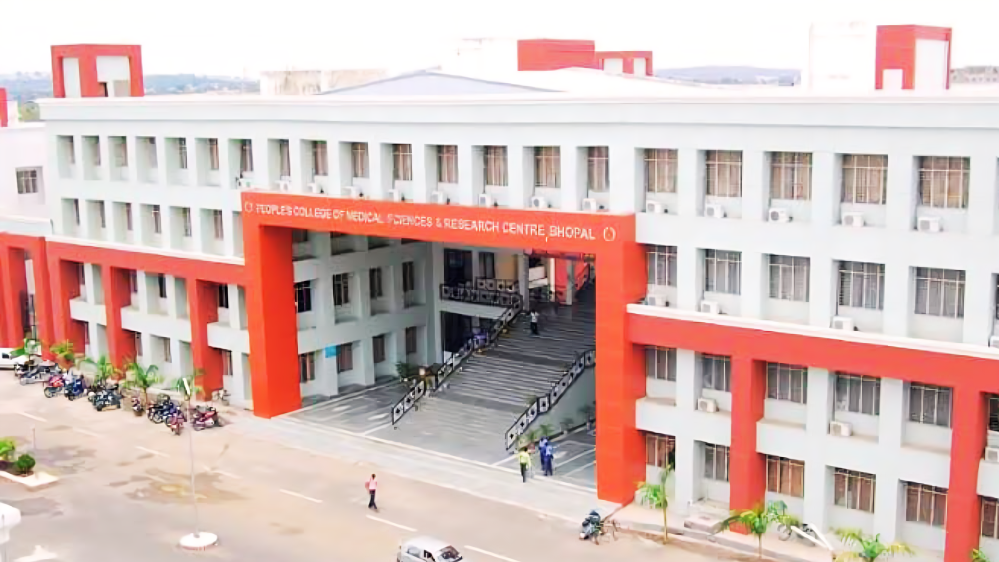
PCMS’s 900+ bed multispecialty hospital ensures ample OPD and IPD exposure. Key infrastructure available to PG students includes:
- High-dependency & intensive care units (ICU, NICU, PICU)
- Advanced operation theatres with laparoscopy setup
- Radiology suite (CT/MRI/Ultrasound)
- Fully equipped pathology and microbiology labs
- Skill labs & simulation centre for procedural practice
Eligibility & Selection (Quick Guide)
- Essential: Valid NEET PG score and MBBS degree from an NMC-recognized college.
- Registration with state medical council or NMC at the time of admission.
- Seat allotment via MP NEET PG counselling — management/NRI seats handled as per state rules.
Typical Fee Structure (Indicative)
Fees change yearly. The ranges below are illustrative for planning purposes only.
| Category | Indicative Annual Fee |
|---|---|
| Clinical MD/MS | ₹17,00,000 – ₹24,00,000 |
| Para-clinical | ₹6,00,000 – ₹9,00,000 |
| Non-clinical | ₹2,00,000 – ₹4,00,000 |
| NRI Quota | $45,000 – $70,000 per year |
Career Pathways & Fellowships
After MD/MS, graduates can pursue sub-specialty fellowships (DM/MCh), clinical fellowships abroad, or pursue careers in tertiary hospitals, academic medicine, private clinics, public health roles, and pharmaceutical/medical device industries. PCMS alumni have access to placement assistance and academic networks for fellowship applications.
How We Help — Admission Support Services
- NEET PG counselling support & preference strategy
- Management & NRI quota seat advisory (transparent process)
- Document verification & admission follow-up
- Fee negotiation guidance & instalment planning
- Pre-joining orientation & hostel assistance